Nuestra Promoción 2019 "Francisco Paz y Bien"

“Estudiante Fatimense; Me siento muy orgullosa de ti por estar tomando este gran reto de seguir superandote cada día. Realmente eres una persona muy emprendedora y con altas ganas de salir adelante. Sé que tú podrás lograr todo aquello que desees alcanzar”.

Bienvenidos a la Institución Educativa Nuestra Señora de Fátima

Seamos todos bendecidos por Dios nuestro Padre, pues necesitamos de su bendición para cumplir la misión que él nos ha encomendado como educadores y con mucha más razón como educadores en la fe, en este año lectivo 2019.

Bienvenidas al Año Académico 2019

Queridas estudiantes, aprovechen al máximo el gran potencial que hay dentro de cada una de ustedes, ser buenas estudiantes, disciplinadas y constantes en sus deberes diarios. Ustedes no solo construyen su propia historia, sino que construyen también la de nuestro colegio tanto del presente como la del futuro.

Bienvenidas a nuestras estudiantes del Primer Grado del Nivel Secundario

Nuestras aulas, pasillos y patios se vuelven a llenar de vida y alegría, pues ustedes queridas estudiantes, que son el alma de nuestra Institución, la fuerza que nos mueve y la razón principal de nuestra labor docente, ya están de regreso.

miércoles, 5 de junio de 2019

Lista de cotejos para cuaderno

COMENTARIOS DEL DOCENTE
Paz y bien estimado padre de familia:
A través de la siguiente Lista de Cotejo se visualizan las acciones que su menor hija debe
 mejorar en la presentación de los cuadernos del área.
LISTA DE COTEJO PARA LA REVISIÓN DE CUADERNOS_SEC. 2019
N°
CRITERIO
SI
NO
1
Registra la carátula del periodo.


2
Consigna la visación del mes firmada por el padre de familia.


3
Consigna el sílabo del periodo con la firma del padre.


4
Registra la fecha en la sesión de aprendizaje.


5
Registra el número de sesión de aprendizaje.


6
Registra el título de la sesión de aprendizaje.


7
Escribe el desempeño de la sesión de aprendizaje.


8
Escribe la evidencia de la sesión de aprendizaje.


9
Desarrolla la totalidad de sesiones de aprendizaje en el periodo: talleres, organizadores, prácticas, cuestionarios, etc.).


10
Usa la caligrafía adecuada para el desarrollo de la sesión (letra ligada)


11
Cuida la ortografía en el desarrollo de las sesiones de aprendizaje.


12
El cuaderno de trabajo está limpio y bien cuidado.


13
Se visualizan los marcos rojos.


14
Pega las evaluaciones de periodo y registra la firma del padre de familia.


15
El cuaderno está forrado con el color establecido, tiene el número de orden y la etiqueta.


¿Qué podré mejorar para el siguiente periodo?
_______________________________________________________________
_______________________________________________________________

Butterfly lyrics


Butterfly Fly Away

You tucked me in
Turned out the light
Kept me safe and sound at night
Little girls depend on things like that
Brushed my teeth
And combed my hair
Had to drive me everywhere
You were always there
When I looked back
You had to do it all alone
Make a living, make a home
Must've been as hard as it could be
And when I couldn't sleep at night
Scared things wouldn't turn out right
You would hold my hand
And sing to me
Caterpillar in the tree
How you wonder who you'll be?
Can't go far but you
Can always dream
Wish you may and wish you might
Don't you worry, hold on tight
I promise you
There will come a day
Butterfly fly away
Butterfly fly away (butterfly fly away)
Got your wings, now you can't stay
Take those dreams
And make them all come true
Butterfly fly away (butterfly fly away)
You've been waiting for this day
All along you know just what to do
Butterfly
Butterfly
Butterfly
Butterfly fly away
Butterfly fly away
Butterfly fly away


domingo, 5 de mayo de 2019

Vocabulary 5th year, first term


Vocabulary. 5th Year
remain
best- known
developed
tool
dating
such
upper
turned
way
through
take in
ratio
decrease
half
quantity

Vocabulary 4th year, first term


Vocabulary. 4th Year
mainland
finches
attract
although
environment
own
set of species
remain
remarkably
unchanged
stil
overfishing
threaten
surrounding
huge
square
deep
untouched
besides
placing
halfway
depths

miércoles, 24 de abril de 2019

4th year Present Perfect Simple vs Present Perfect Continuous


Present Perfect Simple vs Present Perfect Continuous
Exercise 1
Choose the present perfect simple or present perfect continuous to complete the sentences below. If both tenses are possible, use the present perfect continuous.
1.       I __________ (cycle) and my legs are really tired now.
2.       How long ________________ (know)  Peter?
3.       Somebody ____________ (eat)  my cookies. There are none left.
4.       Somebody _______________ (eat) my cookies. There are very few left.
5.       How many books _______________ (write)?
6.       She must be tired. She  __________________ (write) all afternoon.
7.       I ______________ (read) all afternoon? I _________________(read) 5 chapters.
8.       I think I  ________________________ (like) chocolate since I was born.
9.       They __________________ (travel)  for months, and they  _________________ (visit)three countries so far.

Exercise 2
Choose the present perfect simple or present perfect continuous for each gap below.

1.       I ______ the book you lent me and it's great. I'll give it back to you when I finish it.
a. 've read
b. was read
c. 've been reading

2. Bruce ______ tennis since he was a child. He ______  many trophies.
a. has been playing / has won
b. is playing / has won
c. has played / has been winning

3. You ______ too much time playing that stupid game!
a. 've spent
b. 've spending
c. 've been spending

4. You ______ tennis since 10 o'clock. How many sets ______ ?
a. have played / have you been playing
b. have been playing / have you played
c. are playing / have you played

5. He ______ since he was a little boy. Choose TWO correct options
a. is fishing
b. has fished
c. has been fishing

6. He ______ to me since we met last summer. He _______ over 100 emails.
a. 's been writing / 's sent
b. 's written / 's been sending
c. is writing / 's sent

7. ______ any fish today?
a. Have you caught
b. Have you been catching
c. Have you catching

8. A: "He ______ hundreds of job applications, but he's got no answers yet."     B: "How long ______ for a job?"
a. 's been sending / has he been looking
b. 's sent / has he looked
c. 's sent / has he been looking

9. Now that I ______ tidying the house, I'm going to clean it.
a. have finished
b. have been finishing
c. am finishing

10.   We ______ this TV for ages. I think it's time to buy a new one.
a. have
b. 've had
c. 've been having

Quantifiers
Exercise 1
Choose much, many, little, few, some, any to complete each sentence.

1.       We haven't got _____ petrol. We need to stop and get some.
a. much
b. many
c. little

2. We had ________ rain last autumn.
a. a lot of
b. much
c. many

3. There was ________ food in the fridge. It was nearly empty.
a. little
b. a little
c. few

4. You travel a lot. Have you been to _____ countries?
a. much
b. many
c. few

5. It costs _____ money to give your children a good education.
a. much
b. many
c. a lot of

6. There was ________ space for all the people who came.
a. very little
b. very few
c. many

7. "Have you got any coins for the vending machine?" "Yes, I have ________."
a. a little
b. a few
c. few

8. There's _____ of sun cream in the bottle.
a. a bit
b. a little
c. a few

9. We need to go to the greengorcer's. There are _____ potatoes left.
a. few
b. a few
c. a little

10. There was _____ traffic so we arrived very early.
a. a little
b. a few
c. little

5th year Narrative tenses


Narrative tenses
Exercise 1
Choose the correct narrative tenses to complete the sentences below.
1.       I told John not to drive, because he _____ all night.
a. drank
b. was drinking
c. had drunk
d. had been drinking

2. Why did you change the channel? I ______ that movie.
a. watched
b. was watching
c. had watched
d. had been watching

3. When I _____ out of the shower the lights _____.
a. got / were getting off
b. had got / were getting off
c. was getting / went off
d. had been getting / had got off

4. When I saw Clara I realised that she ______ much in all those years.
a. didn't change
b. wasn't changing
c. hadn't changed
d. hadn't been changing
5. When he entered the room somebody _____ him in the head.
a. hit
b. was hitting
c. had hit
d. had been hitting
Exercise 2
Choose the correct option to complete the text below.
Many years ago I 1______________  (decide) to spend New Year's Eve with my family. I 2 ____________ (spend) new year with my parents but I had nowhere to go, and being with my family seemed preferable to being on my own.

When my parents 3 ____________ (open) the door I could see they 4_____________ (smile) , and that they were genuinely happy to see me. I 5  _______________(be) addicted to heroin for 10 years, and for them, seeing me was the confirmation that I wasn't dead in an alley. Unfortunately, I 6 ___________ (have) nothing new or exciting to tell them, just the same sad old stories. I 7 ____________(go)from crappy job to crappy job, being invariably sacked, and I 8 _________________  (restore) to crime whenever I was out of money. Same old, same old.

During dinner, I 9_________________ (drink up) a few glassfuls of whisky. I 10  _______________ (need) something to make ease the pain, because for the whole evening my sisters 11  ________________ (look) at me with such contempt that it was unbearable. My own sisters 12 ______________ (hate) me. Then I had a moment of realisation; I 13 _________________ (discover) that they would never hate me as much as I hated myself.

When we finished dinner I 14 ________________(raise) my glass. "I'm going into rehab," I said. My parents 15  ________________ (look) at me with some kind of hope. Parents never lose hope. But my sisters just 16  ______________________ (look) down with disdain. They 17 _____________________ (Know) perfectly well that I had been in rehab centres many times before, and that this time wouldn't be different.

But this time it was different. After that day, I 18 __________________ (remember) that look in my sisters' eyes every day, every time I 19 _________________  (want) to shoot some heroin.  10 years later, on a New Year's Eve, I thanked my sisters because they 20  _________________ (save) my life. They kissed me with their new look in their eyes, the look of love. 

lunes, 8 de abril de 2019

Dynamic Verbs and Stative Verbs. Grammar for all

Dynamic Verbs
and Stative Verbs
But really they aren't as difficult or as complicated as you may think.

The most important reason you need to know about these is because stative verbs can't usually be used in the progressive form. But more about that later!

Firstly, what do the words "dynamic" and "stative" mean?  

They aren't very common words in everyday English, but they are grammar terms you will need to know to understand this subject. 


Dynamic

"Dynamic" is an adjective which means something is moving or changing. 

In English grammar a "dynamic verb" means that the verb describes an action rather than a state. Dynamic verbs are sometimes known as "action verbs."

"Joe is chasing the bus."
"Joe is chasing the bus."


Stative

"Stative" is an adjective which describes something as having a state, or existing (this is a very uncommon adjective). 

In English grammar a "stative verb" means that the verb describes a staterather than an action.


Stative verbs are sometimes known as "state verbs." 

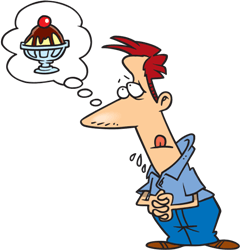
"Kevin wants some ice-cream."

"Kevin wants some ice-cream."
So now you know the meaning of the terms, let's look at some examples!

First, here is a list of some dynamic verbs. You can see that they are all used to describe an action, change, or process. Most of them are used to describe an activity which has a start and an end. 

Examples of dynamic verbs:

  • eat
  • walk
  • learn
  • grow
  • sleep
  • talk
  • write
  • run
  • read
  • become
  • go
These words can all be used in the progressive form. 

Example sentences with dynamic verbs:

  • "I can't talk right now, I'm eating dinner."
    Present progressive used to describe an action happening now.
  • "Sorry, I'm out of breath because I've been running."
    Present perfect progressive used to describe an action that started in the past, continued for some time and has results now.
  • "I didn't steal the necklace! I was sleeping when someone broke into the shop!"
    Past progressive used to talk about an action that was happening at a particular time in the past.
Here is a list of some of the stative verbs. Some of these describe relationships between things or people (for example, own) and some describe emotions or states of mind.

Examples of stative verbs:

  • love
  • hate
  • like
  • prefer
  • doubt
  • seem
  • know
  • own
  • understand
Here are some examples, showing that these words cannot be used in the progressive form.

Correct: "I like chocolate, but I prefer cake."
Incorrect: "I'm liking chocolate but I'm preferring cake."

Correct: "I don't understand you when you speak quickly."

Incorrect: "I'm not understanding you when you speak quickly."

There are also some verbs that can be either dynamic or stative, depending on their meaning and context in the sentence. I'm sure you know by now that there are many words in English that can have more than one meaning!

Examples of verbs that can be either dynamic or stative:

  • think
  • mind
  • have
  • smell
  • sound
Let's look at some examples of how these verbs are used differently.

Example sentences:

  • "I think it is wrong to hit children."
    Here, think is a stative verb. It means "to have an opinion" and it cannot be used in the progressive form in this case.

    BUT

    "I'm thinking about buying a new car."
    Here, thinking is describing a process, or an action. This is something that is happening, rather than simply being.
    So here we can use the progressive form.
  • "I don't mind if we watch a movie tonight."
    Here, mind means "be bothered by", which is a state of mind, not an action. Therefore, it is stative.

    BUT

    "I'm not being nosy. I'm minding my own business!"
    Here, minding means "looking after" and is therefore a process and a dynamic verb.
  • "I have three brothers."
    Have here talks about the family relationship the speaker has with her brothers and is therefore stative.

    BUT

    "I'm having a bad day today. I'll call you when things are better."

    Having in this sentence means the speaker is going through the process of a bad day.
    It is therefore dynamic.


All this may seem complicated, but if you read and listen to as much English as you can, you will soon start to know which verbs sound right in the progressive. If you keep the basic idea of dynamic verbs vs. static verbs in the back of your mind, it will help you greatly.